
Responsible outbound calling: controls to put in place before launch
Build an outbound operating process with approved contact sources, suppression, time-zone handling, caller ID, retry limits and reviewable evidence.
Read the guide
Make schedules, local time, temporary closures and reopened service behave predictably for callers and staff.
After-hours routing should use an explicit business time zone, approved schedules and a useful closed-service outcome. Test calls just before and after boundaries, including temporary closures and reopening. A correct holiday entry does not prove every number, queue and downstream team follows the same schedule.
Part of our guide: Contact center software
List the public service hours, queue hours, specialist-team availability and any appointment desk hours separately. Assign who approves changes and who configures them. A main line can be open while a destination team is closed. Record these relationships instead of using one unreviewed calendar for the whole business. Identify numbers with special obligations or established escalation processes and keep them within their approved service design.
Confirm the location whose hours govern each service and how the platform represents that region. A fixed UTC offset can diverge from regional clock changes. Add approved holidays and temporary closures through the supported method. Distinguish an all-day closure from a shortened service window. Google Calendar’s time-zone concepts are useful background for scheduling, but telephony routing still needs its own demonstrated time-zone and exception behaviour.
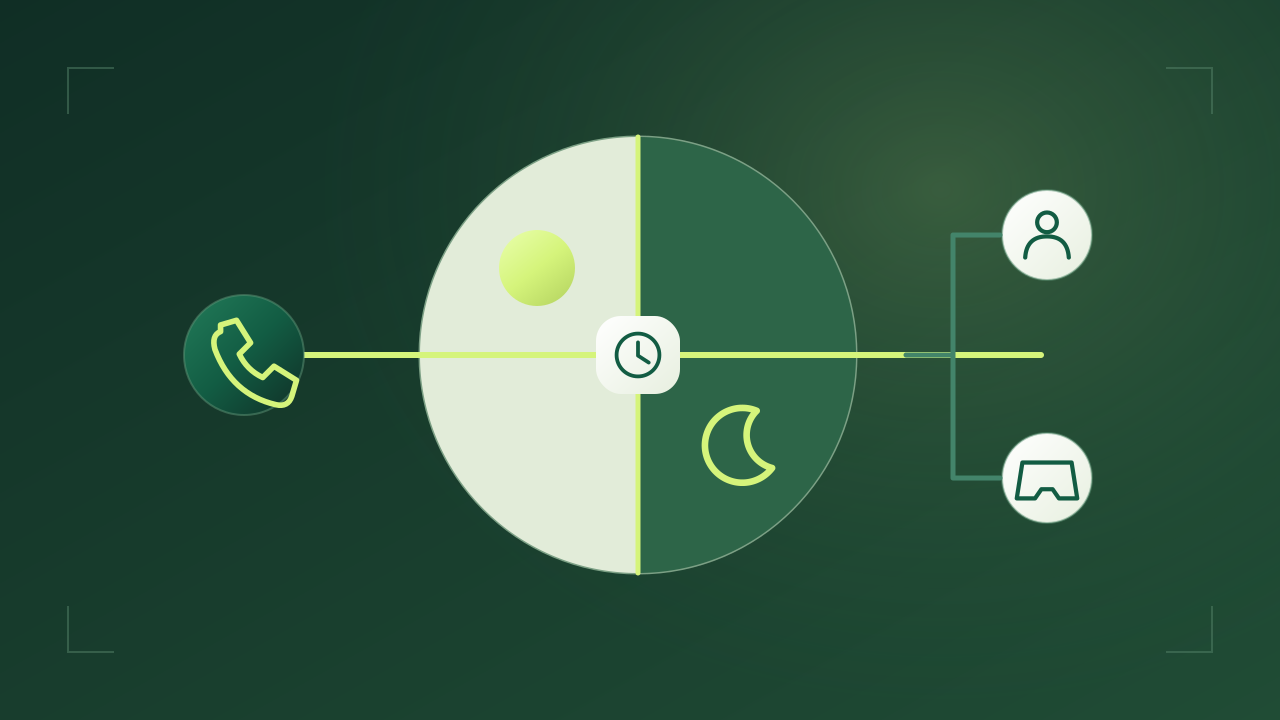
Map each service and destination schedule.
A fictional support desk normally closes at six but has an approved early closure at two on a particular fixture date. Test a call before two, immediately after two and at the next opening period. Check every relevant number and destination. This is a sandbox scenario, not an announcement of real hours. The expected outcome should include the message, destination and ownership of any request left while the team is closed.
State that the relevant team is unavailable and explain the actual next action. If callers can leave a request, identify who will review it and how its status is tracked. Do not promise an immediate callback or confirmed booking without an accepted process. If a different approved channel is offered, test it. A message that gives a dead email address or unstaffed alternative merely moves the failure to another channel.
Include a call crossing midnight where applicable, a closure removed early and a schedule update made while a call is already in progress. Define how existing callers are treated. Practise the authorised emergency change and rollback using a test route. Inspect version history or the available change record. A schedule is an operating control, so staff need to know when it changed and which routes were affected, not only that the calendar screen saved.
Check what happens to pending requests and staff visibility when service resumes. Review callers reaching the wrong closed message during ordinary hours and cases that bypassed the intended closure. DialerBee describes business-hour and holiday schedule gates plus no-agent handling; verify your exact route. Retest when offices, time zones or team responsibilities change. A single passed holiday fixture should not become a universal claim about all future dates or integrations.
Keep an approved reopening check with an owner even when the closure is automatic. An expired temporary announcement or an unreverted manual override can continue after the calendar says service is open. Test the external caller path rather than relying only on the saved schedule values.
Only if their hours and exceptions genuinely align and the complete routing has been demonstrated.
No. The request needs a recorded owner and an operating process when the service reopens.
Prepared by the ContactCenter.me editorial team, a BroadNet resource powered by DialerBee. Product statements reflect the linked documentation checked 2026-11-25. Operational examples are planning guidance. Read our editorial standards and commercial disclosure.
Track the practical work needed before moving queues, numbers, agents and workflows.
Turn expected daily workload, productive hours and shrinkage into a simple staffing baseline.
Build a weighted quality scorecard and export a reusable review template.

Build an outbound operating process with approved contact sources, suppression, time-zone handling, caller ID, retry limits and reviewable evidence.
Read the guide
Evaluate caller ID as a complete operational process rather than a number displayed on an outbound call.
Read the guide
Test keypad digits through real trunks, transfers and menus without confusing audible tones with detected input.
Read the guideExplore your requirements with a DialerBee specialist. Bring your workflows, your carrier, and your questions.