
Design disposition codes that support action and honest reporting
Separate call connection, customer outcome and next action, then test codes against realistic conversations and CRM mappings.
Read the guide
Turn callback requests into scheduled, traceable work with accurate outcomes and a practical shift handover.
A callback is a commitment to a customer, not just another attempt in a campaign. Record the purpose, requested window, contact details, owner and outcome. Distinguish a request from a confirmed time, honour the approved contact policy and transfer ownership explicitly when the original agent is unavailable.
Part of our guide: Contact center software
Decide whether your operation offers a precise time, a time window or an unconfirmed request. The agent’s wording and the recorded state must agree. Capture the reason, relevant account context and the customer’s preferred number through the approved process. A note saying call later does not create a schedulable commitment. Define how local time and any uncertainty are clarified before the original conversation ends.
Choose an individual or queue that is responsible for the next action and a backup when the person leaves or changes state. Make transfer acceptance explicit. Supervisors should see overdue requests and work without an owner, not only a total callback count. If callbacks are part of an agent’s pending list, demonstrate how reassignment works in the actual product rather than assuming the list automatically follows staffing changes.
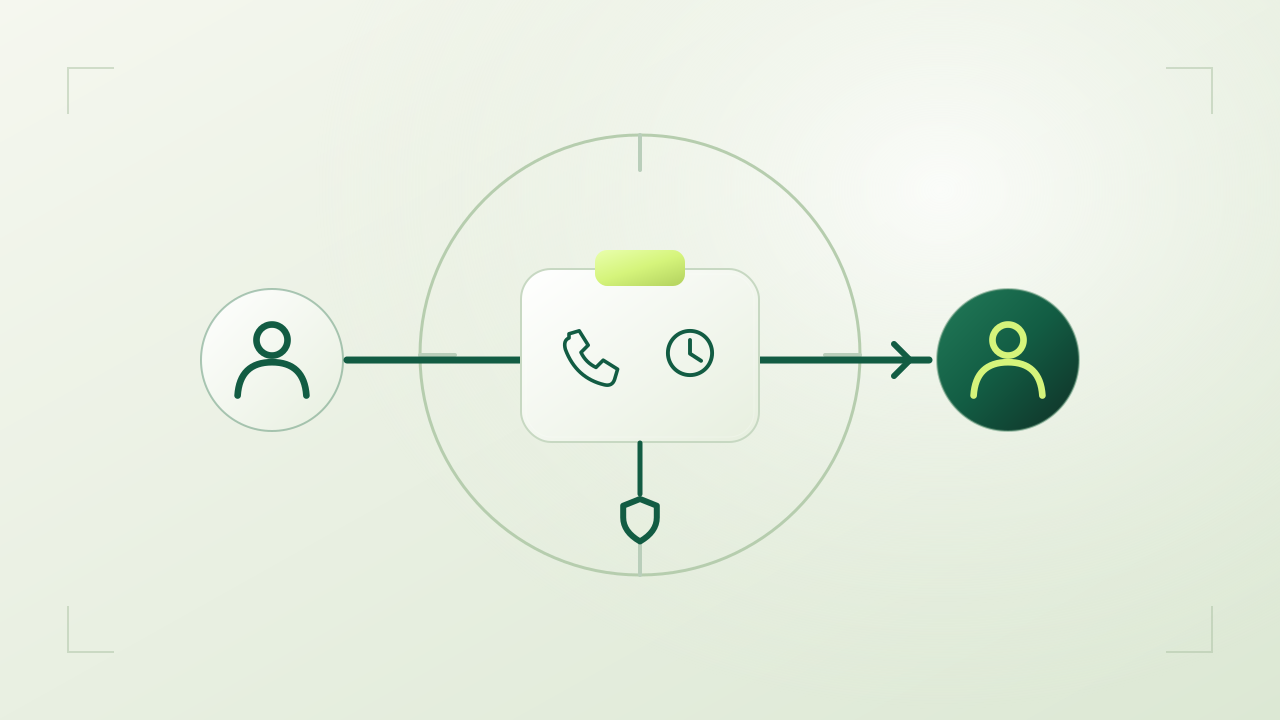
Record the promise and its actual confirmation state.
A fictional support customer asks for a callback tomorrow between ten and eleven at the business’s confirmed local time. The current agent will not be on shift. Record the request and have the next-shift owner accept it before closing the handover. If the business cannot confirm that window, explain the actual status to the customer. The success criterion is an accurate owned commitment, not the presence of a calendar icon.
Define no answer, busy, wrong number, customer unavailable, resolved and another agreed callback as distinct outcomes. A call attempt within the window does not prove a conversation occurred or the issue was resolved. Set the next action under the approved policy rather than automatically recycling every failure. Record which request the attempt fulfils, especially when one customer has several open issues or repeated attempts from different teams.
Create two fixture requests for the same issue, cancel one before it is due and change the number on another. Simulate a worker retry or integration timeout. Verify that cancelled requests are not called and uncertain processing does not create duplicate commitments. Test overdue work across a shift boundary. Check what happens when a policy restriction is applied after scheduling; a stored request must not silently override the latest approved contact conditions.
DialerBee describes agent callback scheduling and AI callbacks; autonomous AI campaigns against whole lists remain described as coming soon. Demonstrate the exact callback trigger, timing, context and fallback for your intended use. Review completed commitments, unowned requests and repeat failures together. Keep the authority to stop automated follow-up clear. Expand only when the team can reconstruct a callback from the original promise to its final customer outcome.
Check the end of the promised window as well as its start. An overdue callback needs an explicit status and escalation, not silent rescheduling into another day. Give the receiving team enough context to acknowledge a missed commitment honestly and agree the next action with the customer.
No. Use states and wording that reflect the actual commitment your team has accepted.
Define the next action from the outcome and approved contact policy. Wrong numbers, cancellations and restrictions require different handling.
Prepared by the ContactCenter.me editorial team, a BroadNet resource powered by DialerBee. Product statements reflect the linked documentation checked 2026-11-25. Operational examples are planning guidance. Read our editorial standards and commercial disclosure.
Estimate attempt volume, connected workload and daily agent requirements.
Build a weighted quality scorecard and export a reusable review template.
Measure how many eligible cases were resolved without a repeat contact.

Separate call connection, customer outcome and next action, then test codes against realistic conversations and CRM mappings.
Read the guide
Build an outbound operating process with approved contact sources, suppression, time-zone handling, caller ID, retry limits and reviewable evidence.
Read the guide
Design clear call-quality criteria, weighted scoring, critical-failure rules, reviewer calibration and useful agent coaching.
Read the guideExplore your requirements with a DialerBee specialist. Bring your workflows, your carrier, and your questions.