
How to evaluate tenant isolation without relying on a label
Build an authorised tenant-separation test covering searches, reports, recordings, exports and partner administration.
Read the guide
Map tasks to permissions, test allowed and denied actions, and keep support access and offboarding accountable.
An access matrix states which role may perform each business action on which records. Build it from actual tasks, separate review from administration and test both allowed and denied actions with authorised sample accounts. A role name such as supervisor does not define the permissions of every platform.
Part of our guide: Contact center software
List actions including answering calls, opening recordings, exporting contacts, changing a campaign, editing knowledge, managing users and viewing client reports. Define the record scope as well as the action: an agent’s own cases, a team, one tenant or the wider platform. Role titles vary between organisations. Starting from tasks prevents a familiar title from granting broad access simply because the default template contains it.
Distinguish the ability to review an outcome from the ability to alter calling rules, retention, integrations or user privileges. Decide which changes need a second reviewer under your own governance process. Keep the person who approves a policy identifiable even when another person implements it. A clear division of responsibility also makes support easier: staff know which changes they can resolve and which require an authorised administrator.
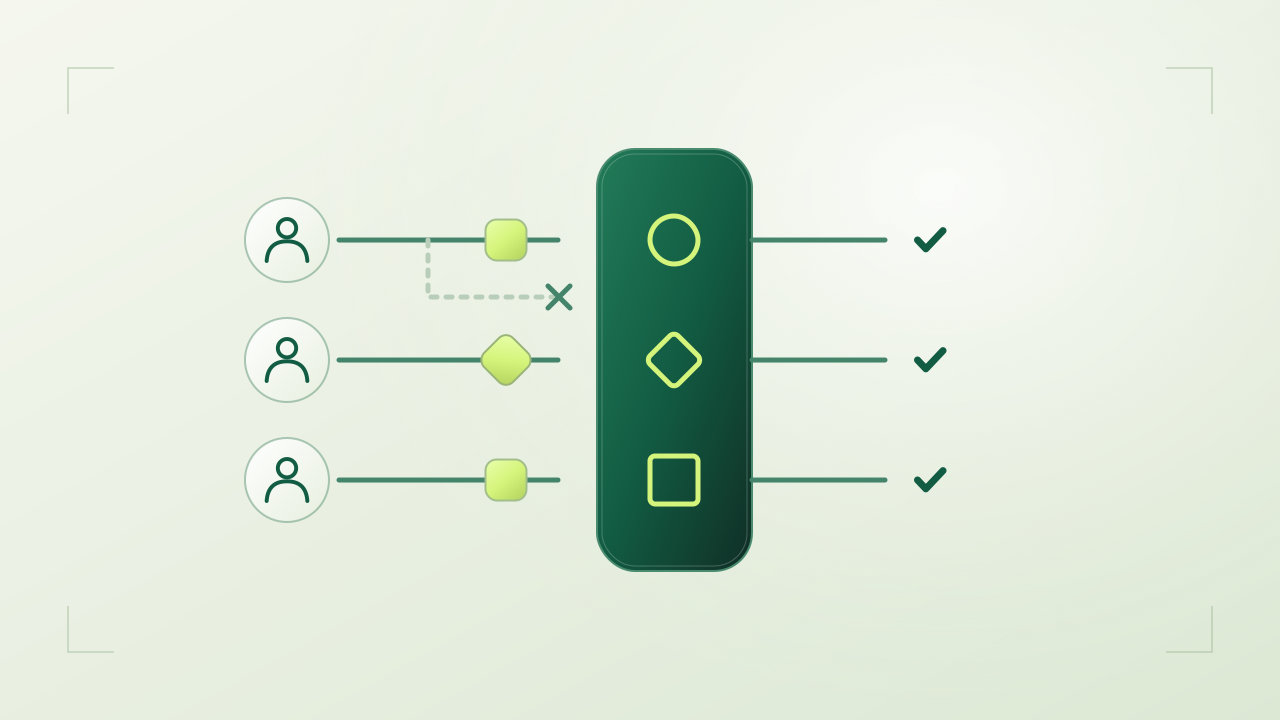
Define permissions by action and record scope.
A fictional BPO wants a client reviewer to inspect only agreed quality samples and reports for that client. Write explicit allowed actions and explicit exclusions, such as other clients’ recordings or user administration. Use sample data to demonstrate both. If the platform’s role model cannot express the desired scope, change the workflow or agree an alternative before granting a broader role merely to make a dashboard visible.
A successful sign-in is not proof that the person has correct record access. Test search results, direct sample links, exports and relevant API access within an authorised environment. Check what happens when a role changes while a session is active. Record the expected outcome and evidence. Do not use another person’s credentials or unrelated production records to explore boundaries; the test owner should provide the accounts and fixtures.
Document how temporary support permissions or impersonation, if available, are authorised, recorded and removed. Check user departure, password reset, identity-provider removal and API-key handling as separate processes. Removing a console login does not automatically prove that every integration credential or exported file is disabled. Identify the owners and expected effect of each step so an offboarding task can be verified rather than simply marked complete.
DialerBee describes per-tenant roles, audit logging and identity controls. Review the relevant configuration and contract for your deployment instead of transferring an assurance from a group-level badge. Its trust page identifies SOC 2 Type II as planned. Keep the permission review current after new channels, client roles or integrations are introduced. The release decision should show the approved matrix and unresolved limitations, not just a list of successful logins. Give each exception an approver, expiry and review point so temporary support access does not silently become a permanent privilege.
Test an emergency permission grant with a sample account, including its approval, expiry and removal. Confirm that ordinary work still functions afterwards. A permanent administrator role created to solve one urgent incident should become a visible exception to review, rather than an undocumented new default.
No. Grant the actions and data scope needed for the role, then demonstrate the resulting workflow.
Not necessarily. Check integration keys, active sessions, identity-provider behaviour and previously exported data within the agreed scope.
Prepared by the ContactCenter.me editorial team, a BroadNet resource powered by DialerBee. Product statements reflect the linked documentation checked 2026-11-25. Operational examples are planning guidance. Read our editorial standards and commercial disclosure.
Create a practical requirements brief for your contact center software evaluation.
Track the practical work needed before moving queues, numbers, agents and workflows.

Build an authorised tenant-separation test covering searches, reports, recordings, exports and partner administration.
Read the guide
Build a practical RFP covering real journeys, deployment, security, integrations, complete pricing, pilot acceptance and exit requirements.
Read the guide
Connect recording purpose, access, expiry, approved holds and exports in one operational lifecycle.
Read the guideExplore your requirements with a DialerBee specialist. Bring your workflows, your carrier, and your questions.