
Inbound staffing explained: workload, Erlang C and shrinkage
Understand how call arrivals, handle time, queueing assumptions and shrinkage turn into an interval staffing plan.
Read the guide
Erlang B sizes lines for blocked calls, Erlang C sizes agents for queues, Erlang A adds abandonment. Formulas, a worked example and where each fails.
Use Erlang B when callers who find every line busy are blocked and lost, which is how you size trunks or lines. Use Erlang C when callers wait in a queue and nobody hangs up, which is how you size agents for service level. Use Erlang A when waiting callers lose patience and abandon. Erlang C is the cautious choice when abandonment is real but unmodeled, because it overstates waiting.
Part of our guide: Contact center software
All three models start from the same input: offered load in erlangs. Offered load A = calls per hour × average handling time in seconds ÷ 3,600. Ten erlangs means, on average, ten circuits or ten agents busy all the time if capacity were unlimited.
What differs is what happens to a caller who cannot be served at once. In Erlang B the caller is blocked and gone. In Erlang C the caller waits as long as it takes. In Erlang A the caller waits but may give up. Pick the model that matches the real behavior of your system, not the one your software offers first.
Erlang B has no queue. If all n lines are busy, the call receives a busy signal or an overflow treatment and is lost. The blocking probability B(n) is the share of offered calls that find all lines busy. ITU-T Recommendation E.520 is the standards body's title for sizing circuits without overflow facilities.
You do not need the factorial form. Use the recurrence: B(0) = 1, then B(n) = A × B(n−1) ÷ (n + A × B(n−1)). Run it from n = 1 up to the line count you need. It is numerically stable and easy to put in a spreadsheet.
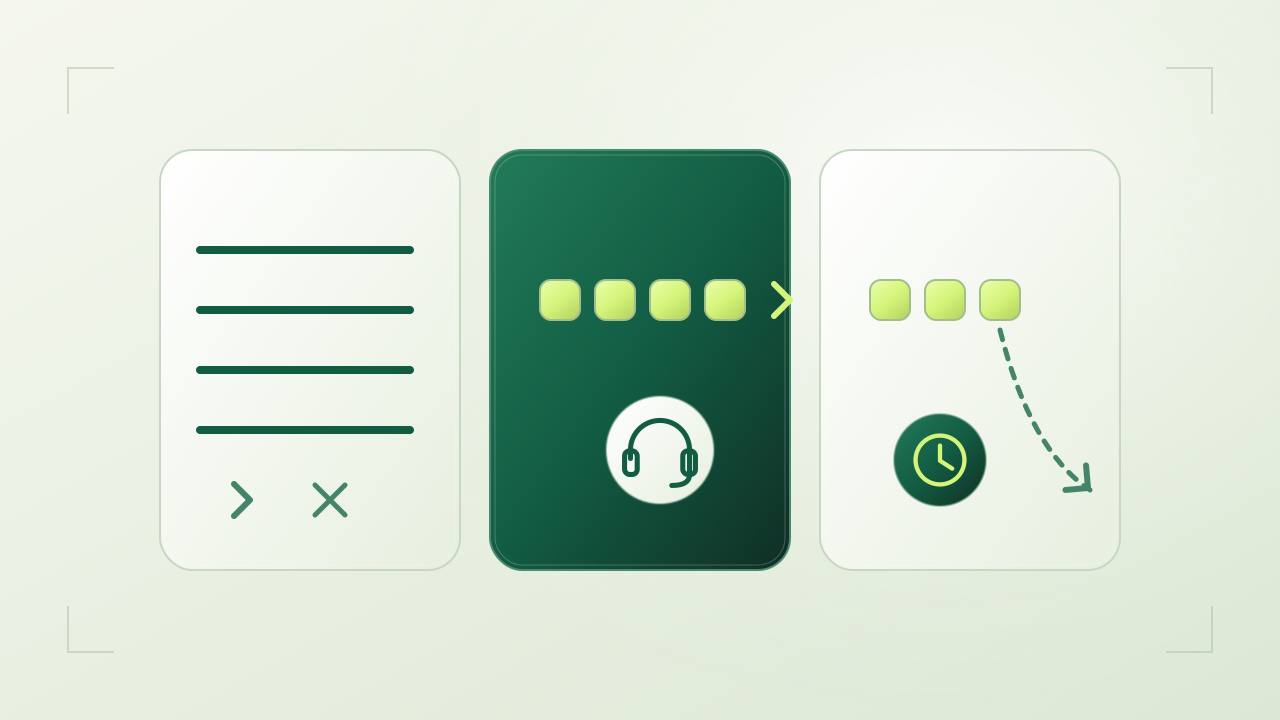
Erlang B is for loss systems with no queue, such as trunks and lines; Erlang C is for queues; Erlang A adds abandonment.
Erlang C adds an infinite queue. Calls that find all n agents busy wait until one is free. Its outputs are the probability of waiting, the average wait and the service level. Service level = 1 − P(wait) × e^(−(n − A) × T ÷ AHT), where T is the threshold in seconds. The model needs n > A, or the queue grows without limit.
Because nobody abandons in the model, waits are overstated whenever real callers give up. That error is usually on the safe side for staffing, which is why Erlang C stayed the default. Use the Erlang C calculator to run the numbers for your interval.
Erlang A extends Erlang C with a patience time. Each waiting caller hangs up at some rate. Two extra things follow: the abandoned share becomes an output, and the model reflects that abandonment lowers the queue and so shortens the waits of those who stay.
The cost is an extra input you must estimate: mean patience, ideally from your own abandonment-by-wait-time data. Without that data, a guessed patience number gives false precision. Many workforce tools expose it as an option; use it only when you can measure it.
Lines, Erlang B. Assume 200 calls per hour with a 180-second average handling time. A = 200 × 180 ÷ 3,600 = 10 erlangs. Blocking by line count: 12 lines give 11.97%, 15 lines give 3.65%, 17 lines give 1.29%, 18 lines give 0.71%. For a 1% blocking target you need 18 lines.
Agents, Erlang C. Same load, target 80% answered in 20 seconds. With 13 agents the service level is 79.6%, just short. With 14 agents it is 88.8%, and occupancy is 10 ÷ 14 = 71.4%. You need 14 agents.
Agents, Erlang A. Assume mean patience equal to twice the handling time (360 seconds). With 13 agents, Erlang C predicts 28.5% of calls wait; Erlang A predicts 23.2% wait and 2.3% abandon. The gap is the effect of callers leaving. These figures come from the standard formulas; your own patience data will move them.
Every model is a simplification. The failures are predictable, so check for them before trusting any output.
Ask three questions in order. Does the caller wait? If no, use Erlang B. Do waiting callers leave in meaningful numbers, and do you have data on when? If yes, use Erlang A, otherwise Erlang C. Then validate: compare model output with last month's actual service level and abandonment for the same intervals, and adjust shrinkage and handling time until they agree.
For capacity checks across both lines and agents, size lines with Erlang B first, then agents with Erlang C, and confirm that trunks exceed agents plus the waiting callers you accept.
Erlang B assumes blocked callers are lost and gives a blocking probability, so it sizes lines or trunks. Erlang C assumes blocked callers wait in a queue and gives wait probability and service level, so it sizes agents.
Yes, as a starting point for a single-skill queue. It overstates waits when callers abandon, so staffing is slightly cautious. Validate against actual service level, and move to Erlang A or simulation when abandonment or multiple skills matter.
Erlang A models queues where waiting callers abandon after some patience. It outputs abandonment as well as waits and is more realistic than Erlang C, but it needs a patience estimate that you must measure from your own data.
Multiply calls per hour by average handling time in seconds and divide by 3,600. For 200 calls per hour at 180 seconds, that is 10 erlangs. Use the busiest interval, not the daily average.
Normally not. Erlang B means callers who find all servers busy are lost, but callers usually queue for agents. Use it for trunks, IVR ports and other pools without waiting.
Prepared by the ContactCenter.me editorial team, a BroadNet resource powered by DialerBee. Product statements reflect the linked documentation checked 2026-11-25. Operational examples are planning guidance. Read our editorial standards and commercial disclosure.
Find how many lines, trunks or channels you need so that only a small share of busy-hour calls are blocked.
Estimate the agents needed to meet a queue service-level target, with occupancy and shrinkage included.
Estimate average concurrent calls and a configurable headroom allowance.

Understand how call arrivals, handle time, queueing assumptions and shrinkage turn into an interval staffing plan.
Read the guide
Design an IVR around caller intent, useful routing, accessible prompts and reliable fallbacks rather than internal departments.
Read the guide
Compare outbound dialing modes by preparation needs, agent readiness, list quality, customer experience and campaign controls.
Read the guideExplore your requirements with a DialerBee specialist. Bring your workflows, your carrier, and your questions.