
Normalise contact-center quotes when vendors bill different units
Convert billing increments, seats, carrier minutes and included AI into a common workload comparison.
Read the guide
Build a fully loaded cost per agent hour from wage, taxes, benefits, overhead and supervision, then convert it to cost per productive hour and minute.
Fully loaded cost per agent hour is total annual cost of employing an agent divided by hours, in two versions. Cost per paid hour adds wage, payroll taxes, benefits, equipment, space, software and supervision. Cost per productive hour divides the same cost by the hours spent handling contacts, after shrinkage and occupancy. The productive figure is usually much higher and is the one that drives cost per contact.
Part of our guide: Contact center software
A posted wage covers only one line of the budget. Employers also pay payroll taxes, insurance, paid leave and benefits, and they provide a seat, a headset, software, space and a supervisor. Then only part of each paid hour is spent talking to customers.
Build the number line by line from your own payroll and invoices. Averages from other companies hide differences in country, contract type and site model, and widely quoted rules of thumb are rarely traceable to a source.
The OEWS program of the Bureau of Labor Statistics publishes wage estimates by occupation, including customer service representatives, with the latest national reference period currently May 2025. Look up the figure for your occupation and area, and treat it as a market check against your own pay scale, not as the number to put in the model.
Start with base pay plus regular bonuses and shift premiums. Then add employer payroll taxes, health and retirement contributions, paid leave and any statutory insurance in your country.
For a US reference point, the Bureau of Labor Statistics Employer Costs for Employee Compensation release for June 2026 states that total employer compensation costs for private industry workers averaged $46.89 per hour worked, made up of $32.82 in wages and salaries and $14.07 in benefits. Benefits were 30.0 percent of total compensation. That is all private industry, not contact centers, and the benefit count includes paid leave, so use it only as a sanity check and avoid counting paid leave again in your hours.
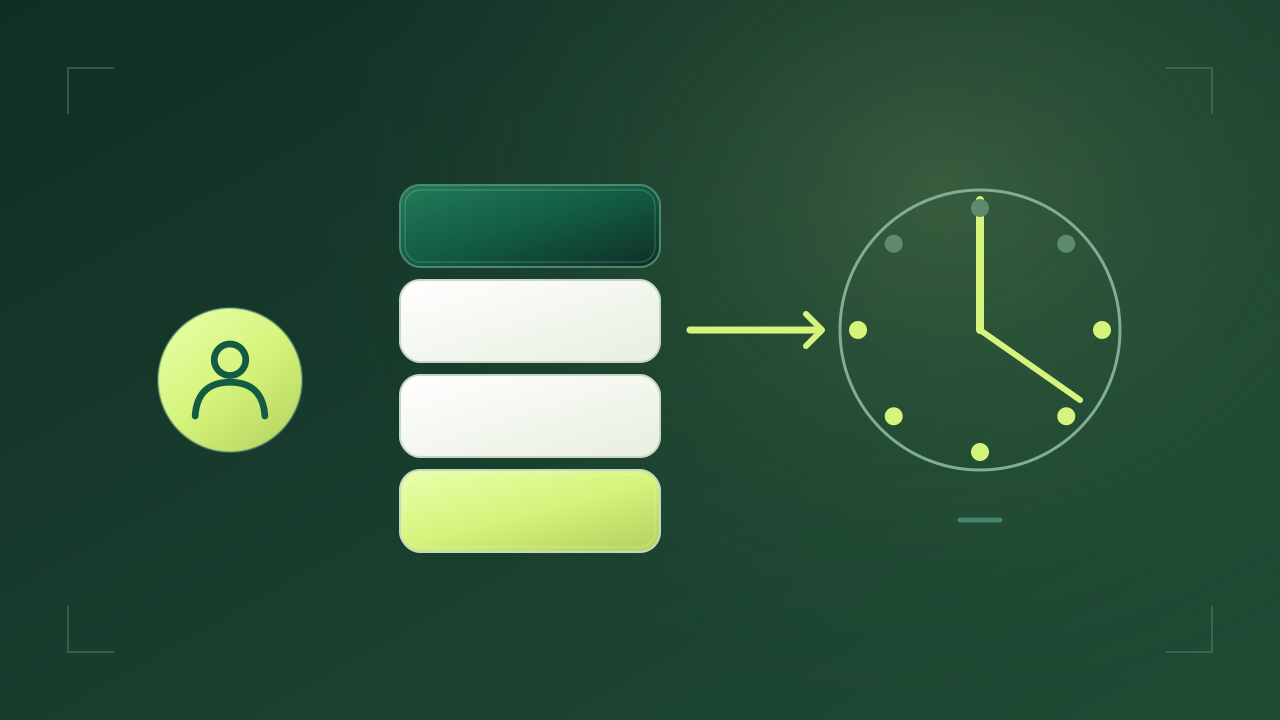
Loaded cost per paid hour is wage plus taxes, benefits, seat overhead and supervision per hour.
List every monthly cost that exists because an agent has a seat, then divide by the number of seats.
Add team leaders, quality analysts, trainers, workforce planners and the share of management that exists to run the floor. Divide their loaded cost by the number of agents they support. A supervisor who looks after 15 agents adds one fifteenth of a supervisor's cost to every agent hour.
Do not forget the people who are not on the phones but whose work only exists because of the floor: recruiting for the group, payroll support and IT help for agents. Allocate them with a clear rule, such as a share of agents or of seats, and keep the rule for every period.
Cost per paid hour answers a payroll question. Cost per productive hour answers a pricing question, and it needs two ratios.
Shrinkage is the share of paid time when agents are not available, such as breaks, training, meetings, leave and absence. Occupancy is the share of available time spent handling contacts. Productive share = (1 − shrinkage) × occupancy. Cost per productive hour = cost per paid hour ÷ productive share.
Example of the sensitivity: with the same $30.93 per paid hour, cutting shrinkage from 30% to 25% gives a productive share of 0.75 × 0.80 = 0.60 and a cost per productive hour of $51.55, a fall of $3.69. Occupancy raised from 80% to 85% at 30% shrinkage gives $51.98. Both are modest moves with large effects over thousands of hours.
Assume a base wage of $20.00 per hour and a 30% loading for taxes and benefits, giving $26.00 per paid hour. Assume monthly seat overhead of $335 (software, equipment, space, telecom). Assume one supervisor costing $45 per hour loaded for every 15 agents: 45 × 2,080 ÷ 12 ÷ 15 = $520 per agent per month.
Paid hours per month are 2,080 ÷ 12 = 173.33. Overhead per paid hour = (335 + 520) ÷ 173.33 = $4.93. Fully loaded cost per paid hour = 26.00 + 4.93 = $30.93.
Now assume 30% shrinkage and 80% occupancy. Productive share = 0.70 × 0.80 = 0.56. Cost per productive hour = 30.93 ÷ 0.56 = $55.24. Per handled minute = 55.24 ÷ 60 = $0.92. A 6-minute contact therefore costs about $5.52 in agent time. Replace every input with your own.
Cost per handled minute = cost per productive hour ÷ 60. Agent cost per contact = cost per handled minute × average handling time in minutes. Add technology, carrier and overhead that is not per seat to reach total cost per contact.
Three levers move this number: lowering shrinkage, raising occupancy to a level agents can sustain, and shortening handling time without hurting resolution.
Keep two views side by side. Finance wants cost per paid hour because it reconciles to the ledger. Operations wants cost per productive hour because it shows what an hour of customer work really costs. Mixing the two is the most common reason a cost-per-contact figure fails to match the budget.
Keep an assumptions table next to the result so finance can audit it.
Review the model every quarter and after any change in pay, tooling or staffing mix. A stale cost per hour quietly distorts every business case built on it, from outsourcing decisions to automation payback.
Add wage, employer taxes, benefits, per-seat overhead and a share of supervision, then divide by paid hours. For a productive-hour figure, divide again by (1 − shrinkage) × occupancy.
A paid hour is any hour you pay an agent. A productive hour is time actually handling contacts. Because of breaks, training and idle time, productive hour cost is higher than paid hour cost.
It depends on country, role and site model, so no single figure fits. Take your own payroll and invoices and compute it. A wage plus a loading percentage understates cost unless overhead and supervision are added.
Yes. Employer payroll taxes, insurance, retirement and paid leave are real costs of employment. Include them once, and avoid counting paid leave again when you convert paid hours to productive hours.
Divide cost per productive hour by 60. Multiply by average handling time in minutes to get agent cost per contact, then add non-seat technology and carrier costs.
Prepared by the ContactCenter.me editorial team, a BroadNet resource powered by DialerBee. Product statements reflect the linked documentation checked 2026-11-25. Operational examples are planning guidance. Read our editorial standards and commercial disclosure.
Turn salary, payroll costs and overhead into the real cost per paid hour, productive hour and handled minute.
Calculate your blended contact cost and see what a change in volume would mean.
Build an honest monthly and first-year software budget beyond the headline seat price.

Convert billing increments, seats, carrier minutes and included AI into a common workload comparison.
Read the guide
Compare in-house, onshore, nearshore and offshore contact centers by cost per resolved contact, billing model, hidden costs and contract terms.
Read the guide
Build a complete CCaaS cost model covering seats, carrier usage, AI, implementation, support and contract assumptions.
Read the guideExplore your requirements with a DialerBee specialist. Bring your workflows, your carrier, and your questions.