
IVR design: build a call flow customers can finish
Design an IVR around caller intent, useful routing, accessible prompts and reliable fallbacks rather than internal departments.
Read the guide
Separate queue abandonment, closed-hours calls and technical failures, then assign an appropriate recovery action.
Missed-call recovery starts by identifying what happened and whether a response is appropriate. A queue abandonment, an unanswered extension and a failed carrier attempt are different events. Link recovery to an owner, current customer context and approved contact rules rather than automatically calling every number in a raw log.
Part of our guide: Contact center software
Write separate definitions for calls that never connected, callers who left a queue, unanswered routed calls and closed-hours contacts. Decide how very short attempts, test numbers and internal calls are treated. Keep the denominator and event source visible. A single missed label can hide several causes and generate misleading recovery work. Reconcile the definition with the carrier and application reports before counting events as lost customer opportunities.
Capture the number called, time, route and observable outcome. If the caller is known, associate the event through an approved identity process. A number match does not establish why the person called or permit sensitive disclosure. Do not label a missed call a sales lead merely because it appeared on a sales line. Shared numbers and repeated attempts require careful interpretation before assigning the follow-up to an individual customer record.
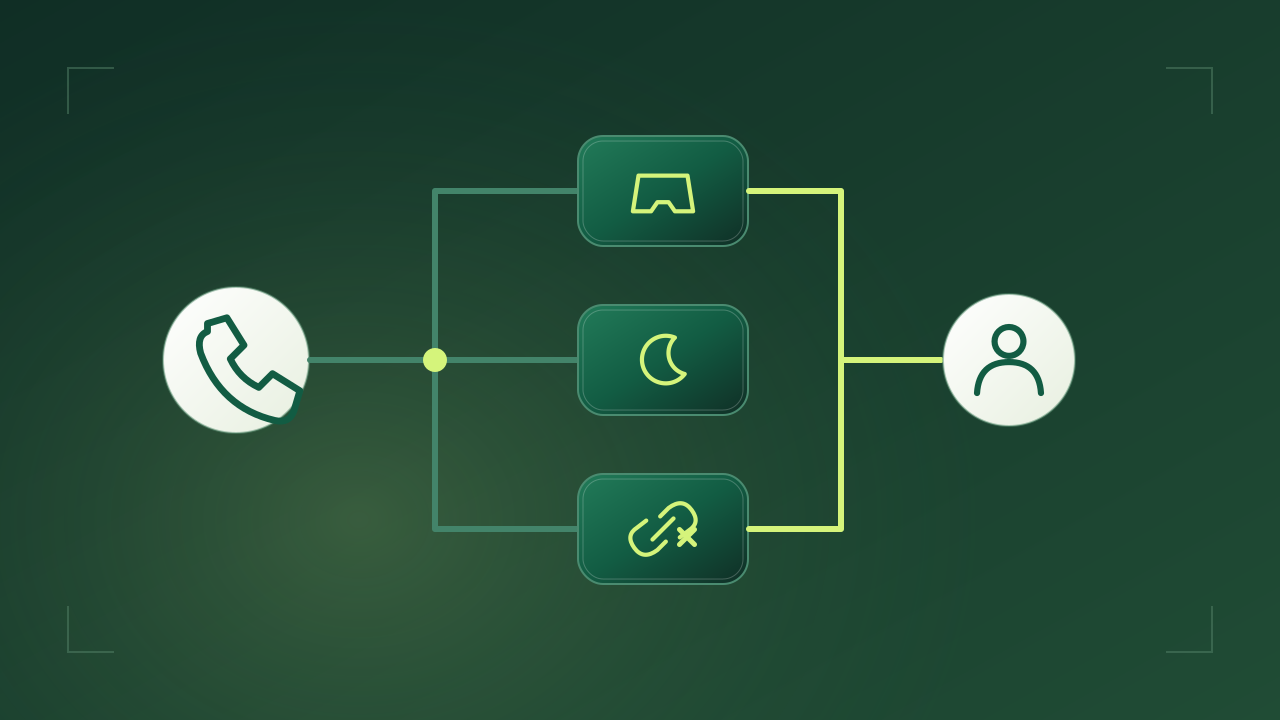
Define the event before generating recovery work.
A fictional desk reviews three events: a caller left after a long queue, a caller reached a closed-hours message and a carrier attempt failed before the application saw it. Assign different investigations. The queue case may need a service recovery owner, the closed-hours case an approved next-action workflow, and the carrier case technical diagnosis. This example demonstrates classification; it does not claim every event is recoverable or represents revenue.
Define which team sees each class, how quickly it is reviewed under your service policy and what an agent should say. If an approved SMS fallback is used, confirm the channel setup, current message and failed-delivery path. Keep callback requests separate from generic outbound retries. A customer who already spoke to another agent should not receive a contradictory apology or repeated call because the recovery process ignored the latest state.
Use authorised fixtures to create repeated calls from one number, a withheld caller ID, a transferred call later answered elsewhere and a failed message. Verify deduplication follows the intended issue model without discarding real separate enquiries. Confirm an unavailable number does not enter an endless retry cycle. Compare the final recovery status with actual call and message events rather than treating task creation as a completed customer response.
Track events by cause, owner and final action, including those correctly excluded from follow-up. Review why calls were missed: insufficient staffing, wrong routing and a carrier issue need different remedies. DialerBee publishes no-agent and closed-hours handling with SMS fallback, but demonstrate its exact behaviour and integration scope. A smaller missed count may reflect classification changes. Keep recovery effectiveness separate from unverified revenue or conversion claims.
Include a fixture where the customer reconnects successfully before the recovery task is worked. Confirm the owner can see that later outcome and decide whether further contact remains useful. This prevents a technically valid missed-call list from becoming stale work that needlessly repeats a conversation.
No. Its purpose and outcome are unknown until supported by evidence; some events are technical, repeated or already resolved.
Use the approved business process and available verified details. Do not invent identity or bypass contact restrictions.
Prepared by the ContactCenter.me editorial team, a BroadNet resource powered by DialerBee. Product statements reflect the linked documentation checked 2026-11-25. Operational examples are planning guidance. Read our editorial standards and commercial disclosure.
Calculate abandonment with a consistent short-call exclusion policy.
Calculate your service level with an explicit short-abandon exclusion policy.
Turn expected daily workload, productive hours and shrinkage into a simple staffing baseline.

Design an IVR around caller intent, useful routing, accessible prompts and reliable fallbacks rather than internal departments.
Read the guide
Design overflow triggers, skills, announcements and ownership so busy queues still give callers a clear next step.
Read the guide
Give alerts a clear signal, owner, urgency and recovery state while testing noise, stale data and acknowledgement.
Read the guideExplore your requirements with a DialerBee specialist. Bring your workflows, your carrier, and your questions.