
A contact-center RFP that asks for evidence, not checkmarks
Build a practical RFP covering real journeys, deployment, security, integrations, complete pricing, pilot acceptance and exit requirements.
Read the guide
Design event identity, signature checks, durable receipt, processing retries and side-effect reconciliation for contact-center integrations.
A robust webhook receiver distinguishes receiving an event from completing its business action. Verify the supplier’s delivery and signature contract, record an appropriate event identity and make repeated processing safe. Do not assume events arrive once or in order, or that returning a success response proves the downstream CRM action completed.
Part of our guide: Contact center software
Ask the producer about event identifiers, retries, ordering, signatures and response time expectations. Treat these as supplier-specific facts. Stripe’s public webhook guidance illustrates duplicate and ordering concerns, but it is not a statement of DialerBee’s exact delivery guarantees. DialerBee describes signed webhooks and a public API. Review the relevant developer contract before deciding which header, body field or retry rule your integration will use.
Follow the producer’s signature-validation process and protect the signing secret server-side. Some schemes depend on the original request bytes, so parsing and reserialising before verification can change what is checked. Reject invalid requests through the defined response behaviour. Keep secrets out of browser code, public exports and diagnostic screenshots. Confirm how key rotation and timestamp checks work for this specific integration rather than implementing a guessed generic signature format.
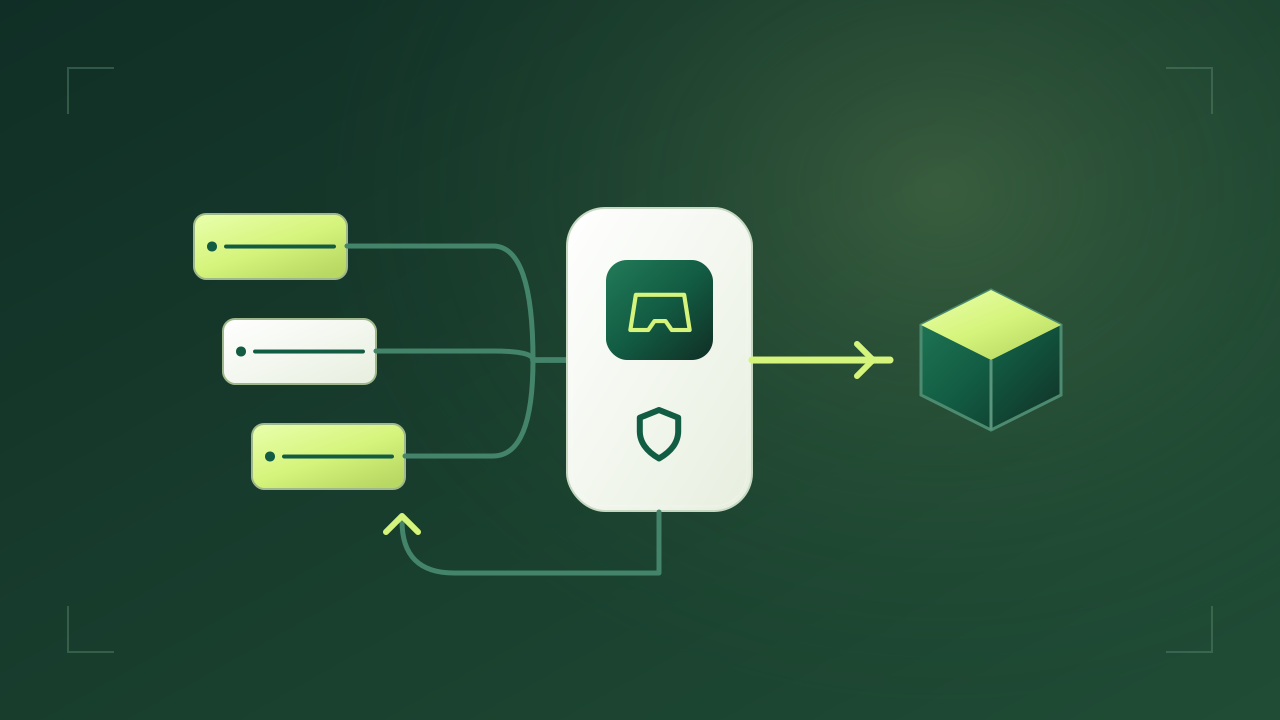
Confirm the producer’s exact event and signature contract.
Use the documented event identity, and scope it to the producer and relevant account or tenant. Keep received, processing, completed and failed states distinct. A payload hash alone may confuse legitimate repeated business events with transport duplicates. Persist the receipt through the supported durable process before acknowledging work if that is the agreed contract. A memory-only set disappears on restart and cannot establish reliable deduplication across concurrent workers.
In a fictional fixture, event A requests a CRM note and is delivered three times. The expected business effect is one intended note, with the repeated deliveries traceable. Then simulate failure after the CRM accepted the note but before local completion was recorded. This harder case needs downstream idempotency or reconciliation; a local received flag alone can either duplicate the note or discard unfinished work. The test should expose that choice explicitly.
A later-state event may arrive before an earlier one. Use the documented revision or state model where available, or retrieve authoritative state under the approved API process. Do not infer total order from a second-level timestamp. Separate safe receipt retry from repeating an SMS, booking or charge-like action. Test a timeout, worker restart and duplicate delivery using fixtures, without contacting real customers or creating real commitments during engineering validation.
Track durable receipts, pending work, failed actions and reconciliation decisions. Keep a controlled replay procedure with an accountable operator and clear scope. Returning HTTP success should mean the stage promised by the contract, not necessarily that every downstream side effect finished. Test the customer-visible result before claiming end-to-end delivery. Document limits, rate handling and incident ownership so a temporary CRM outage becomes observable work rather than silent data loss or repeated customer messages.
Keep a fixture with two legitimate events whose business fields happen to match. They may still require two distinct recorded outcomes. This demonstrates why deduplication needs the producer’s identity and semantics instead of treating identical-looking content as proof that one of the events must be discarded.
No. A failure after an external action but before local completion may still need downstream idempotency or reconciliation.
Only if that is the verified response contract. Many designs acknowledge durable receipt before asynchronous processing completes.
Prepared by the ContactCenter.me editorial team, a BroadNet resource powered by DialerBee. Product statements reflect the linked documentation checked 2026-11-25. Operational examples are planning guidance. Read our editorial standards and commercial disclosure.
Create a practical requirements brief for your contact center software evaluation.
Track the practical work needed before moving queues, numbers, agents and workflows.

Build a practical RFP covering real journeys, deployment, security, integrations, complete pricing, pilot acceptance and exit requirements.
Read the guide
Connect recording purpose, access, expiry, approved holds and exports in one operational lifecycle.
Read the guide
Map tasks to permissions, test allowed and denied actions, and keep support access and offboarding accountable.
Read the guideExplore your requirements with a DialerBee specialist. Bring your workflows, your carrier, and your questions.